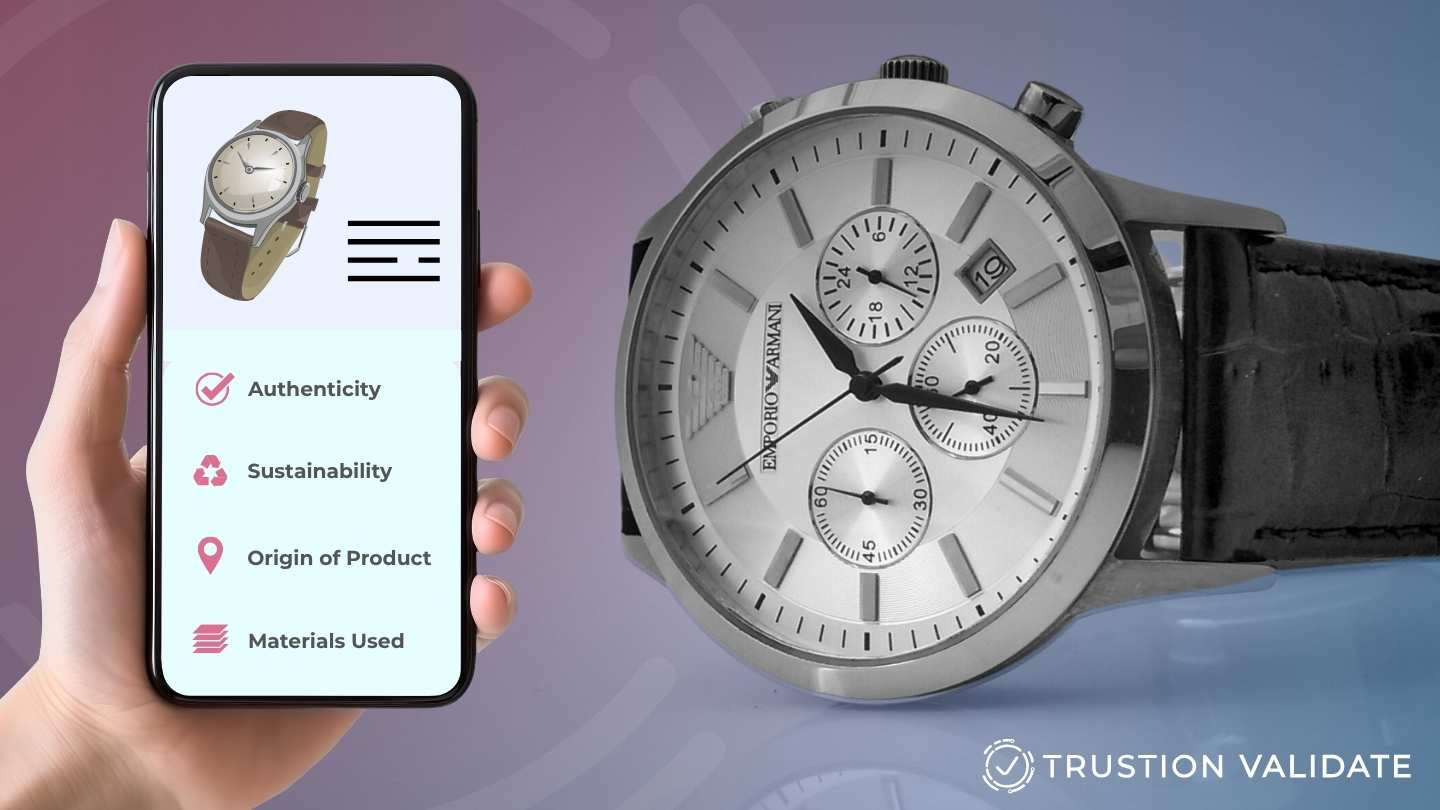
Imagine purchasing a luxury handbag, a rare timepiece, or a handcrafted piece of crystal. As part of the experience, you receive not only the object itself, but also access to a digital record tied uniquely to that item. This record contains everything from the materials used and the production details to proof of authenticity and the full ownership history. This is the essence of a Digital Product Passport.
The concept of a Digital Product Passport (DPP) is gaining momentum, especially in industries where authenticity, provenance and long-term value are central. Within the luxury sector, DPPs are becoming a key tool to guarantee integrity, not only of the product, but also of the brand behind it.
At its core, a Digital Product Passport is a structured digital identity linked to a physical product, stored in a secure and verifiable way using blockchain technology.
Connecting Real Products With a Digital Twin
The idea is simple: every item gets a unique digital companion. This digital twin can include the date and location of manufacture, the materials used, any sustainability certifications, and every change of ownership throughout the product’s life. This information is not stored in a fragile centralised database, but on a blockchain, an immutable and transparent ledger that ensures the data cannot be tampered with.
Provide Trust and Authenticity with Digital Product Passports
For consumers, it means instant access to the full lifecycle of their item. Whether you’re checking if your new handbag really comes from the house of the brand that claims it, or verifying the provenance of a watch before resale, a Digital Product Passport provides clarity where previously there was doubt. For brands, it’s a way to reinforce trust and stay connected with the buyer long after the point of sale.
Built on Blockchain
Blockchain plays a crucial role here. The luxury sector has long struggled with counterfeiting, grey market activity, and opacity in the supply chain. By anchoring data on a decentralised system, brands can offer guarantees that can’t be easily forged or erased. What’s more, they can choose whether this data is visible only to the owner, or publicly verifiable depending on how transparent or private the use case demands.
Real-World Examples of Digital Product Passport Adoption
Several major luxury players are already adopting this technology. Through initiatives like the Aura Blockchain Consortium, a collaboration involving brands such as LVMH, Cartier, and Prada, millions of products have already been registered and tracked.
These passports are not just backend records, but consumer-facing tools: scannable, visual, often interactive. With a tap or scan, the owner can access the full story behind their product, view multimedia content, and receive ongoing brand services such as extended warranties or product care guidance.
Regulatory Practices
Beyond luxury, Digital Product Passports are also being considered in a regulatory context. The European Union is preparing to require such passports in several product categories by 2030, with an initial focus on textiles, batteries, and electronics. The luxury industry, by embracing this model early, positions itself not only as an innovator, but also as a leader in traceability and responsible production.
Adding Meaning to Ownership
Still, the appeal of DPPs is not merely functional. There is something fundamentally human about wanting to understand where something came from, how it was made, and who owned it before us. These details add texture and meaning to ownership. A handbag becomes more than leather and stitching; a watch becomes more than gears and dials.
As digital and physical worlds become increasingly entwined, the Digital Product Passport is set to become as integral to luxury products as the logo on the clasp or the engraving on the back. And unlike paper certificates or serial numbers, these digital records endure, travel and evolve along with the item and its owner.
Learn More on Digital Product Passports
If you’re interested in exploring the concept of Digital Product Passports further, both in the context of the luxury industry and in broader regulatory or technical developments, consider the following resources:
- Aura Blockchain Consortium – The leading blockchain initiative for luxury brands, offering insight into real-world applications of product traceability and authentication
- EU Ecodesign for Sustainable Products Regulation (ESPR) – The European Commission’s framework for introducing mandatory digital product passports across various sectors by 2030
- GS1 Digital Link standard – The technical standard often used to enable product identification and interaction via QR codes or NFC, widely adopted across retail and now used in DPP systems
- World Economic Forum: Digital Product Passport White Paper (2023) – A comprehensive report covering DPP implementations in the context of global trade, circular economy, and supply chain transparency
- Deloitte: Blockchain and the luxury consumer – An accessible breakdown of how blockchain supports authenticity, ownership, and value retention in high-end goods
- Vogue Business — How Aura convinced competitors to collaborate
Looking to create your own Digital Product Passport? Discover how our Digital Identity solutions can help you bring verifiable, blockchain-secured transparency to your products.